Bishkek—Beijing
Study in China
A neighbouring country with vast modern campuses and a strong technical tradition. We help you choose a university and programme, prepare your documents and get from application to dormitory check-in.

Why China
Strong technical education
Engineering, IT and the natural sciences are among the country's main fields. You study close to working labs, with a large technology industry all around.
The Chinese language
You learn it during a preparatory year and keep building it while you study. It is a long-term skill, useful in any job connected with China.
A neighbouring country
China borders Kyrgyzstan, and the two countries share a lot of trade and joint projects. People who know China and its language have somewhere to use that back home.
Scholarships
There is the Chinese Government Scholarship, plus provincial and university scholarships. They are always competitive, so we assess your chances honestly and prepare the application early.

How education works
A bachelor's degree in China usually takes four years, and longer in some fields such as medicine. Programmes are taught in Chinese or in English. The language of instruction affects which universities you can choose, what they require and what it costs.
If you choose a Chinese-taught programme but do not speak the language yet, the usual route is a preparatory language year followed by the degree itself. Chinese proficiency is confirmed with the HSK test. For English-taught programmes, universities usually ask for proof of English, and the accepted form depends on the university.
- Bachelor's degree
- Usually 4 years
- Language of instruction
- Chinese or English
- Preparation
- A language year before a Chinese-taught programme
- Start of studies
- Main intake in autumn
Study areas
Engineering
Mechanical engineering, electronics, energy, automation. One of the strongest fields in the country.
IT and computer science
Programming, data, artificial intelligence. Many programmes are taught in English.
Business and international trade
Economics, logistics, management. A good fit if you want to work with the Chinese market.
Medicine
Longer studies and higher requirements. We check in advance how the degree is recognised in Kyrgyzstan.
Chinese language and culture
For those who want to make the language a profession: translation, teaching, international relations.
Architecture and construction
Design, urban environment, infrastructure. You study in a country that builds a great deal.
Universities worth considering
Universities that applicants often consider when applying to China.
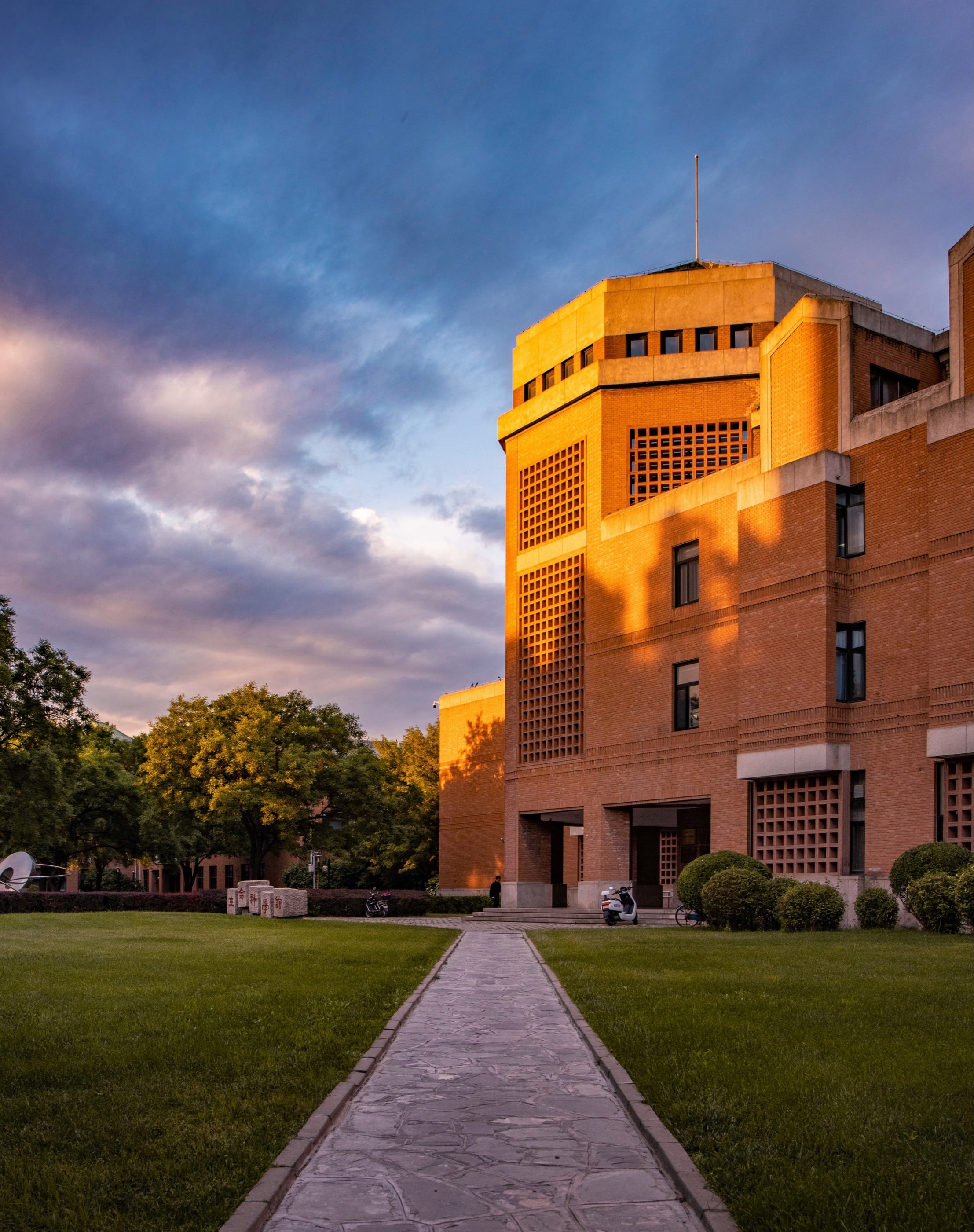
- Tsinghua UniversityBeijingengineering, computer scienceUniversity website
- Peking UniversityBeijingnatural sciences, humanitiesUniversity website
- Fudan UniversityShanghaibusiness and economics, medicine, humanitiesUniversity website
- Zhejiang UniversityHangzhouengineering, computer scienceUniversity website
- Shanghai Jiao Tong UniversityShanghaiengineering, medicineUniversity website
The list is a starting point for your choice. Dream Education is not an official representative of these universities.
Typical requirements
Every university sets its own rules. Below is what comes up most often.
- Secondary school certificate. If you are still in the 11th grade, a school letter with your grades is usually accepted
- Grades. Universities look at your school results, and the bar depends on the university and programme
- Language. Chinese-taught programmes usually ask for an HSK certificate, English-taught ones for proof of English
- Age. Some universities have age requirements, which are worth checking separately if you are under 18
- Health. A medical form is usually part of the application
- Interview or entrance test. Some universities and scholarship programmes hold them
We check the exact requirements against the current rules of the specific university and programme before applying.
Documents
The list varies from university to university. We give you the exact list and the format of each document once the programme is chosen.
- International passport
- School certificate with transcript, or a school letter with your grades
- Notarised translations of your documents
- Language certificate, if you already have one
- Motivation letter or study plan
- Recommendation letters, if the university asks for them
- Medical form in the format used for international students
- Certificate of no criminal record, if the university requires it
- Photos and the university's completed application form
Admission steps
The timing below is approximate. Each university sets its own application dates, and we check them against its current rules.
10–12 months before the start of studies
1. Choosing a field and universities
We go through your interests, grades and family budget. Then we put together a free plan: a list of universities, the language of instruction and your scholarship chances.
8–10 months before
2. Documents and language
We gather the documents, arrange translations and work on the motivation letter. If a language test is needed, we plan the preparation and the test date.
5–8 months before
3. Submitting applications
We apply to the chosen universities and for scholarships. Scholarship applications usually close earlier than regular ones, so we start with those.
2–4 months before
4. University decision and visa
After admission, the university sends the documents for a student visa. We explain what to submit and in what order.
Before departure and after arrival
5. Preparation and moving in
Dormitory, tickets, insurance, a packing list, staying in touch with family. After you land we remain in contact and help with the first everyday questions.
What the budget consists of
There is no single figure for the whole of China. The total depends on the city, the university and the programme, so start by understanding what it is made of.
- Tuition
- Depends on the university, the programme and the language of instruction. English-taught and medical programmes are usually priced differently from Chinese-taught ones.
- Dormitory
- Students usually live on campus. The price depends on the city, the university and the type of room.
- Living
- Food, transport, mobile and internet, study materials. Costs are higher in major cities than in smaller ones.
- One-time costs
- Translations and notarisation, the medical check, visa, insurance and the flight. They are paid before departure and are easy to overlook.
Scholarships exist and can cover part of the costs, but not everyone receives one. We calculate an exact budget for your chosen university in the free plan, with no rough guesses.

Living and dormitory
Most international students live in a dormitory on campus. A campus often feels like a small town: teaching buildings, canteens, a library, sports grounds and shops are all close by.
Daily life runs through your phone: payments, transport and delivery all work in apps. Some familiar websites and services are not available in China, so it is best to set up how you will stay in touch with family before you leave. We tell you what to prepare in advance.
- The dormitory is usually on campus, and conditions and room types depend on the university
- Not every university has a halal canteen, so we check this when choosing
- Climate and pace of life vary a lot from city to city
- Everyday Chinese is useful even on an English-taught programme
What we do
- Shortlist universities and programmes that fit your grades, interests and family budget
- Explain the difference between Chinese-taught and English-taught programmes and help you choose a route
- Prepare the documents: translations, motivation letter, application forms
- Submit applications to universities and for scholarships, and keep track of deadlines
- Guide you through the visa and dormitory steps and prepare you for departure
- Stay in touch with you and your parents after arrival
Frequently asked questions
Do I need to know Chinese to apply?
Not necessarily. There are English-taught programmes, and a Chinese-taught degree is usually preceded by a preparatory language year. We find an option that matches your level and explain how the two routes differ.
What exams do I need to take?
It depends on the university and programme. Universities usually look at your school certificate and a language certificate, and some add an interview or their own test. We check the requirements of your chosen university and tell you what to prepare for.
Can I get a scholarship?
You can apply: there is the Chinese Government Scholarship, as well as provincial and university scholarships. Nobody can guarantee one, because it is a competition. We assess your chances and prepare a strong application.
Can I work while studying?
Part-time work for international students in China is restricted and requires permission, so do not count on it as part of your budget. We check the current conditions with the specific university. We plan the budget so that it does not depend on a job.
Will my parents be kept informed?
Yes. Parents are involved from the first consultation: they see the plan, the budget and the list of documents. At every stage we report what has been done and what comes next, and we stay in touch after arrival.