
Bishkek—Budapest
Study in Hungary
A degree from an EU country, programmes taught in English, and Budapest, a city that is easy to be a student in. We help you choose a university and get from documents to move-in day.

Why Hungary
A European-style degree
Hungary is in the European Union and the Bologna system. A bachelor's degree here follows the same structure as elsewhere in Europe, so the path to a master's is clear.
Study in English
Hungarian universities offer many programmes in English. You do not need Hungarian to get in, and you will pick up everyday phrases once you are there.
A calm way into Europe
Hungary is often chosen as a more affordable way to study in Europe. What it costs in your case depends on the university and programme, and we work that out in advance.
A government scholarship
Hungary runs a government scholarship for international students, Stipendium Hungaricum. It is competitive and its terms are updated every year, so we check together whether you can apply.
How the system works
Higher education in Hungary follows the Bologna system: bachelor's, master's, doctorate. A bachelor's usually takes three years, and three and a half or four in some fields. Medicine, dentistry, pharmacy and a few other subjects are taught as one long programme with no split between bachelor's and master's.
Each university runs admission its own way. Besides documents, you often need to take an entrance exam or an online interview and show your level of English. If your English or subject knowledge is not there yet, some universities offer a preparatory year.
- Bachelor's degree
- Usually 3 years, 3.5–4 on some programmes
- Teaching languages
- Hungarian and English, German on a few programmes
- Start of studies
- Main intake for September, some programmes also start in February
- System
- Bologna, ECTS credits
What you can study
Medicine and dentistry
Long programmes in English with demanding selection. Biology and chemistry exams are typical.
Engineering and technology
Mechanical, electrical, civil engineering. You need solid maths and physics.
IT and computer science
Programming, data, software engineering. Entrance tests often check maths.
Business and economics
Management, finance, international business. One of the widest choices in English.
International relations
Politics, EU law, social sciences. A good fit if you like reading and writing.
Architecture and design
Besides documents, a portfolio or a creative task is usually required.
Universities worth considering
Universities in Hungary that applicants consider most often. We pick the right one for your programme and budget.
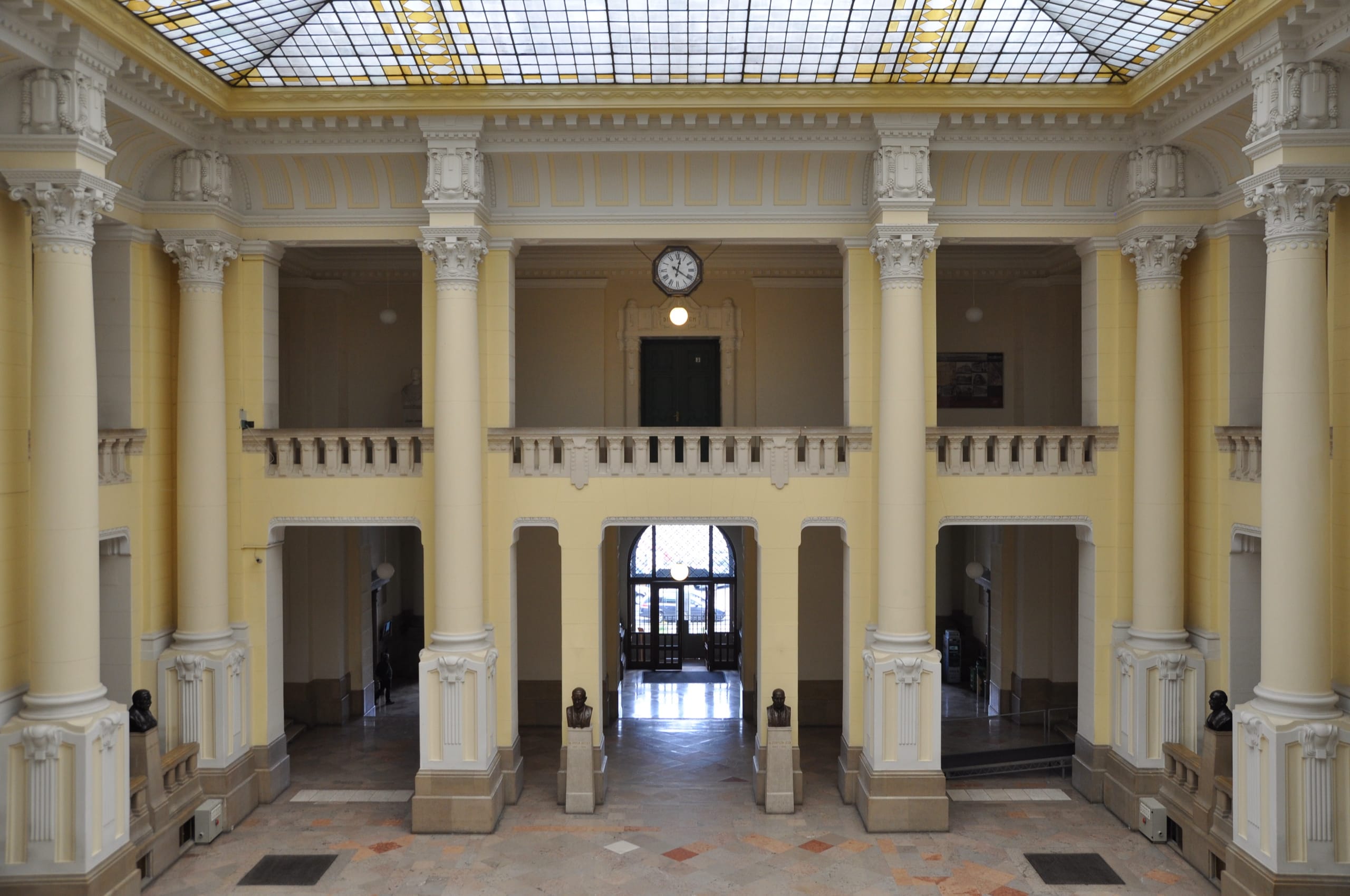
- Eötvös Loránd University (ELTE)Budapesthumanities, natural sciences, computer scienceUniversity website
- Budapest University of Technology and EconomicsBudapestengineering, architecture, computer scienceUniversity website
- University of DebrecenDebrecenmedicine, engineering, agricultural sciencesUniversity website
- University of SzegedSzegedmedicine, natural sciencesUniversity website
- University of PécsPécsmedicine, business and economicsUniversity website
The list is a starting point for your choice. Dream Education is not an official representative of these universities.
What is usually required
Requirements differ between universities and programmes. This is what you are most often asked for.
- A secondary school certificate, or a school transcript if you are still in grade 11
- Proof of English: an international certificate or the university's own test
- An entrance exam or an interview, most often online
- A motivation letter
- For medical programmes, usually exams in biology and chemistry
- For creative fields, a portfolio
We check the exact requirements, the exam format and the level of English needed against the current rules of the specific university before you apply.
Documents
The list depends on the university: some add recommendation letters or a portfolio. The university also decides which translations and certifications it accepts. We put together the exact list for your application.
- International passport
- School certificate with its transcript, or a statement of grades if you do not have the certificate yet
- Certified English translation of your school documents
- English certificate, if you already have one
- Motivation letter
- CV
- Medical certificate
- Photos in the format the university asks for
How admission goes
This is an approximate order. Every university and the scholarship have their own deadlines, so we check exact dates against the current admission rules.
10–12 months before the start of studies
1. Choosing a field and universities
We talk through your goals, your English and your family's budget. Then we make a shortlist of programmes and see which scholarships are open.
8–10 months before
2. Preparing documents and English
We collect documents, arrange translations and work on the motivation letter. Meanwhile you prepare for the English test and the entrance exams.
6–8 months before
3. Applying
We submit applications to the universities you chose. You take the entrance exams or the interview.
3–5 months before
4. The university's answer and the visa
Once the decision arrives, you confirm your place. We put together the documents for the visa and residence permit and sort out housing.
1–2 months before
5. Getting ready to leave
Tickets, insurance, a packing list and your first steps after landing. Once you are in Hungary, we stay in touch.
What the budget consists of
There are no figures here on purpose: they depend on the university, the programme and the year you apply. What we can show is what the budget is made of.
- Tuition
- It depends on the university and the programme. Medical programmes usually cost noticeably more than others.
- Housing
- A university dormitory or a rented flat, often shared with flatmates. The price depends on the city and the district.
- Living
- Food, transport, mobile and internet, study materials and personal spending. Hungary uses the forint, not the euro.
- One-time costs
- Translations and certification of documents, university application and exam fees, visa and residence permit, insurance, the flight.
Scholarships exist: the government's Stipendium Hungaricum and fee reductions at some universities. In the free plan we calculate a budget for the university you choose: tuition, housing and living for a year.

Living in Hungary
Budapest is often called a student city. It has many universities and international students, and you get to class, the library and the centre by public transport. Outside the capital there are the university cities of Debrecen, Szeged and Pécs, which are smaller and quieter.
English is usually enough at university, while a few simple Hungarian phrases help at the shop or the doctor's. Hungary is part of the Schengen area. What that means for travelling on your residence permit is something we go through before you leave, using the current rules.
- Dormitory or flat: options depend on the university
- Public transport instead of a car
- English at university, simple Hungarian day to day
- Classmates from many countries
How Dream Education helps
- We match a university and programme to your goals, your English and your family's budget
- We check which scholarships you can apply for this year
- We collect documents, arrange translations and help with the motivation letter
- We submit the application and explain how the entrance exam and interview work
- We guide you step by step through the visa and residence permit, and help with a dormitory or other housing
- We prepare you for departure and stay in touch with you and your parents after you arrive
Frequently asked questions
Do I need Hungarian, and which exams will I take?
You do not need Hungarian for English-taught programmes. Universities usually ask for proof of English and their own entrance exam or an interview, and the subjects depend on the field. We find out the format at your chosen university in advance and explain what to prepare for.
Can I get a scholarship?
Hungary has a government scholarship, Stipendium Hungaricum, and some universities offer their own fee reductions. The list of countries and the terms are updated every year, so we will check with you whether it is open to applicants from Kyrgyzstan this year. Nobody can promise a scholarship, but we will help you prepare a strong application.
Can I work while studying?
International students in Hungary do take part-time jobs, but the conditions depend on national rules and on the type of residence permit you hold. These rules change, so we check the current ones before you leave. We advise planning a budget that does not rely on a job.
Where will I live?
Most often in a university dormitory or a rented flat shared with flatmates. Dormitory places are not always available everywhere, so it is best to deal with housing right after you are admitted. We help you apply for a dormitory or find another option.
Will my parents know what is going on?
Yes. From the start we talk both to you and to your parents: we explain the stages, the costs and what has already been done. We stay in touch after you arrive too.